テクニカルターム/専門用語は
特別な活動やグループの技術用語 または特徴的な慣用句です
ジャンル内で特定の意味を持たせ/定義した用語で
これによりコミュニケーションの効率性や精度を 高めることができます
Technical Terms of Drone
テクニカルターム
Ee
ESC/Electric Speed Control
モーターの回転数を制御するパーツ
フライトコントローラーからモーターへ送る信号を制御しています
モーター1つにつきESC1つが必要になります
ESC内蔵の FC/フライトコントローラー も発売されています
An electronic speed control (ESC) is an electronic circuit that controls and regulates the speed of an electric motor. It may also provide reversing of the motor and dynamic braking. Miniature electronic speed controls are used in electrically powered radio controlled models. Full-size electric vehicles also have systems to control the speed of their drive motors.
An electronic speed control follows a speed reference signal (derived from a throttle lever, joystick, or other manual input) and varies the switching rate of a network of field effect transistors (FETs). By adjusting the duty cycle or switching frequency of the transistors, the speed of the motor is changed. The rapid switching of the current flowing through the motor is what causes the motor itself to emit its characteristic high-pitched whine, especially noticeable at lower speeds.
Different types of speed controls are required for brushed DC motors and brushless DC motors. A brushed motor can have its speed controlled by varying the voltage on its armature. (Industrially, motors with electromagnet field windings instead of permanent magnets can also have their speed controlled by adjusting the strength of the motor field current.) A brushless motor requires a different operating principle. The speed of the motor is varied by adjusting the timing of pulses of current delivered to the several windings of the motor.
A generic ESC module rated at 35 amperes with an integrated eliminator circuit
Brushless ESC systems basically create three-phase AC power, like a variable frequency drive, to run brushless motors. Brushless motors are popular with radio controlled airplane hobbyists because of their efficiency, power, longevity and light weight in comparison to traditional brushed motors. Brushless DC motor controllers are much more complicated than brushed motor controllers.
The correct phase of the current fed to the motor varies with the motor rotation, which is to be taken into account by the ESC: Usually, back EMF from the motor windings is used to detect this rotation, but variations exist that use separate magnetic (Hall effect) sensors or optical detectors. Computer-programmable speed controls generally have user-specified options which allow setting low voltage cut-off limits, timing, acceleration, braking and direction of rotation. Reversing the motor's direction may also be accomplished by switching any two of the three leads from the ESC to the motor.
Quadcopters
Electronic Speed Controllers (ESC) are an essential component of modern quadcopters (and all multirotors), offering high power, high frequency, high resolution 3-phase AC power to a motor in an extremely compact miniature package. These craft depend entirely on the variable speed of the motors driving the propellers. Fine speed control over a wide range in motor/prop speed gives all of the control necessary for a quadcopter (and all multirotors) to fly.
Quadcopter ESCs usually can use a faster update rate compared to the standard 50 Hz signal used in most other RC applications. A variety of ESC protocols beyond PWM are utilized for modern-day multirotors, including, Oneshot42, Oneshot125, Multishot, and DShot. DShot is a digital protocol that offers certain advantages over classical analog control, such as higher resolution, CRC checksums, and lack of oscillator drift (removing the need for calibration). Modern day ESC protocols can communicate at speeds of 37.5 kHz or greater, with a DSHOT2400 frame only taking 6.5 μs.
Effective Isotropic Radiated Power/EIRP
実効輻射電力
Effective radiated power (ERP), synonymous with equivalent radiated power, is an IEEE standardized definition of directional radio frequency (RF) power, such as that emitted by a radio transmitter. It is the total power in watts that would have to be radiated by a half-wave dipole antenna to give the same radiation intensity (signal strength or power flux density in watts per square meter) as the actual source antenna at a distant receiver located in the direction of the antenna's strongest beam (main lobe). ERP measures the combination of the power emitted by the transmitter and the ability of the antenna to direct that power in a given direction. It is equal to the input power to the antenna multiplied by the gain of the antenna. It is used in electronics and telecommunications, particularly in broadcasting to quantify the apparent power of a broadcasting station experienced by listeners in its reception area.
An alternate parameter that measures the same thing is effective isotropic radiated power (EIRP). Effective isotropic radiated power is the hypothetical power that would have to be radiated by an isotropic antenna to give the same ("equivalent") signal strength as the actual source antenna in the direction of the antenna's strongest beam. The difference between EIRP and ERP is that ERP compares the actual antenna to a half-wave dipole antenna, while EIRP compares it to a theoretical isotropic antenna. Since a half-wave dipole antenna has a gain of 1.64 (or 2.15 dB) compared to an isotropic radiator, if ERP and EIRP are expressed in watts their relation is
EIRP(W) = 1.64 x ERP(W)
If they are expressed in decibels
EIRP(dB) = ERP(dB) + 2.15
ELRS/Express Long Range System
低遅延で 長距離飛行可能なRCプロトコル
Frskyや一部のFUTABA製プロポで使える
海外の方の検証では条件次第で30キロ先まで飛ばすことが可能
ExpressLRS aims to provide the best completely open, high refresh radio control link while maintaining a maximum achievable range at that rate with low latency. Vast support of hardware in both 900 MHz and 2.4 GHz frequencies.
Extended Reality/Cross Reality
エクステンデッド・リアリティ
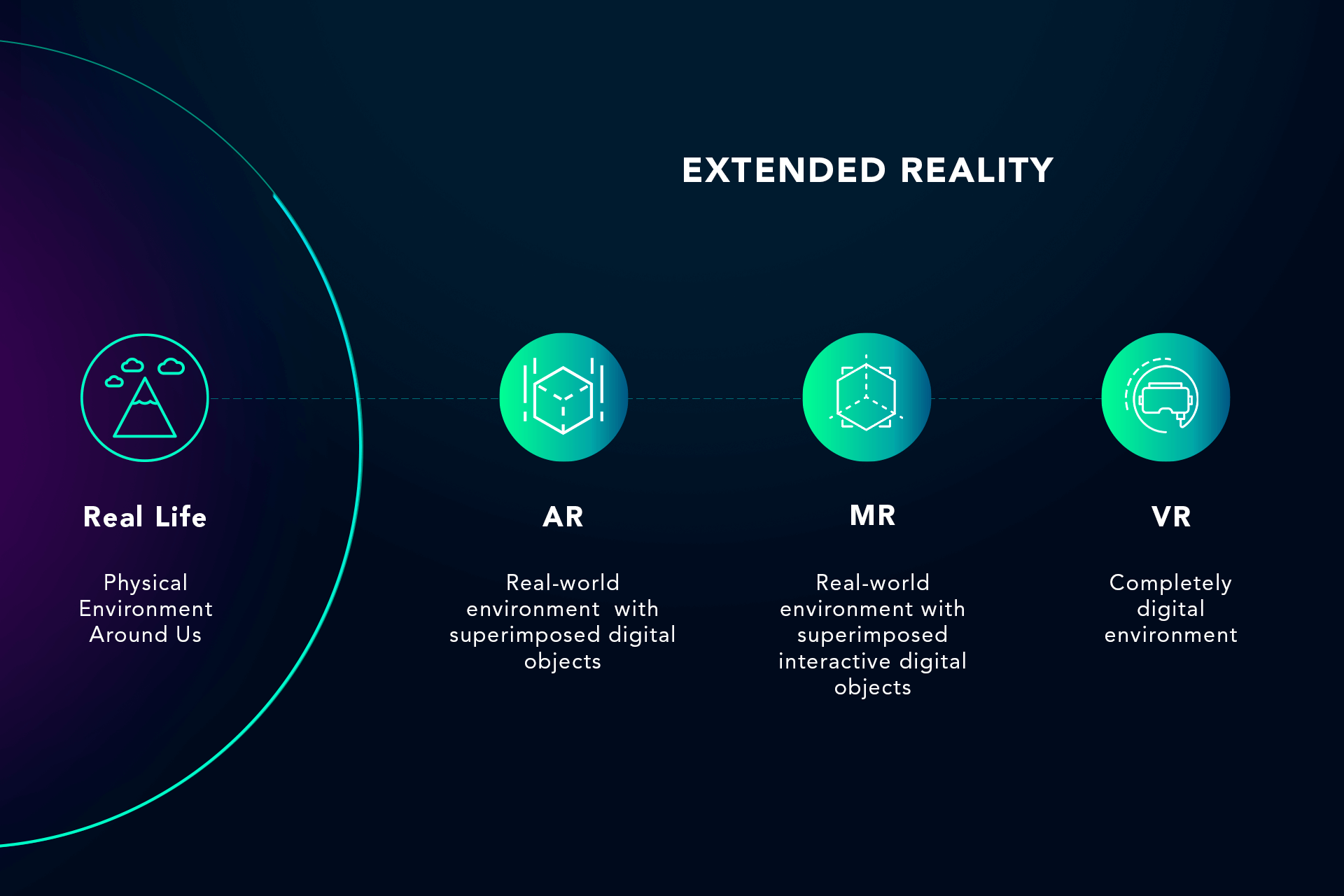
エクステンデッド・リアリティ/ extended reality または クロス・リアリティ/cross reality は 現実世界と仮想世界を融合することで 現実にはないものを知覚できる技術の総称である
そのため
VR/仮想現実
AR/拡張現実
MR/複合現実
SR/代替現実
といった仮想世界と現実を融合させる画像処理技術はいずれもXRに含まれる
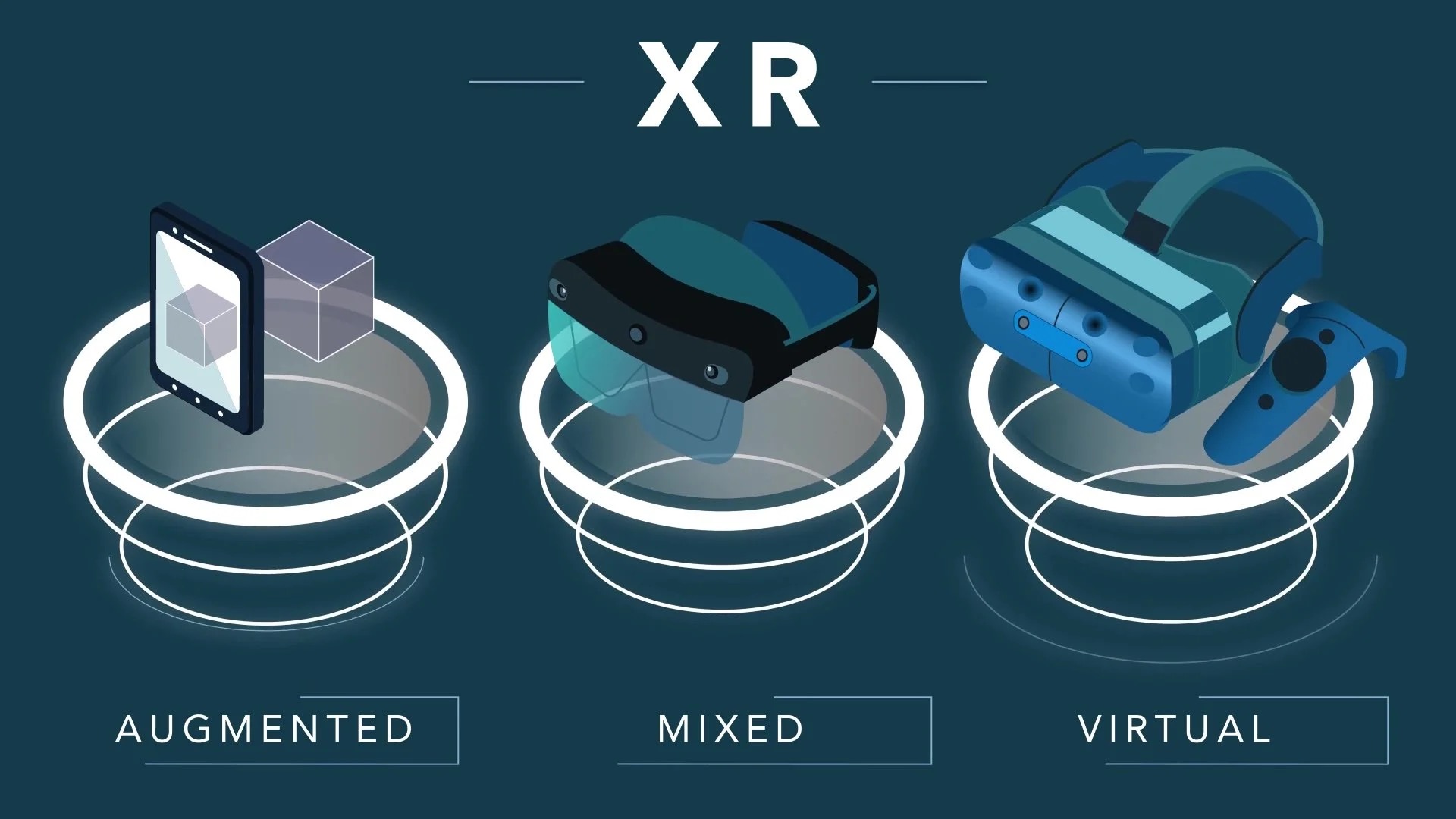
全てCGによる映像を使用しているものがVR\現実世界の映像にデータや映像、CGをオーバーレイしたものがAR
重ねられた映像やCGと現実世界に物理的な相互作用を作り出したものがMR
と 現実世界と仮想世界の融合度合いによって分類され それぞれの表現に使われるハードウェアも異なる
XRの「X」をさまざまな技術を表す変数を意味するものとして「xR」と表記されることもある
「XR」という言葉が生まれた背景には VRやARなどを複合した技術が登場していることが挙げられる
例えば ヘッドマウントディスプレイを使ったVRのゲームにARのコンテンツを組み合わせた場合 それがVRなのかARなのか 境界線を引くのは難しいからである

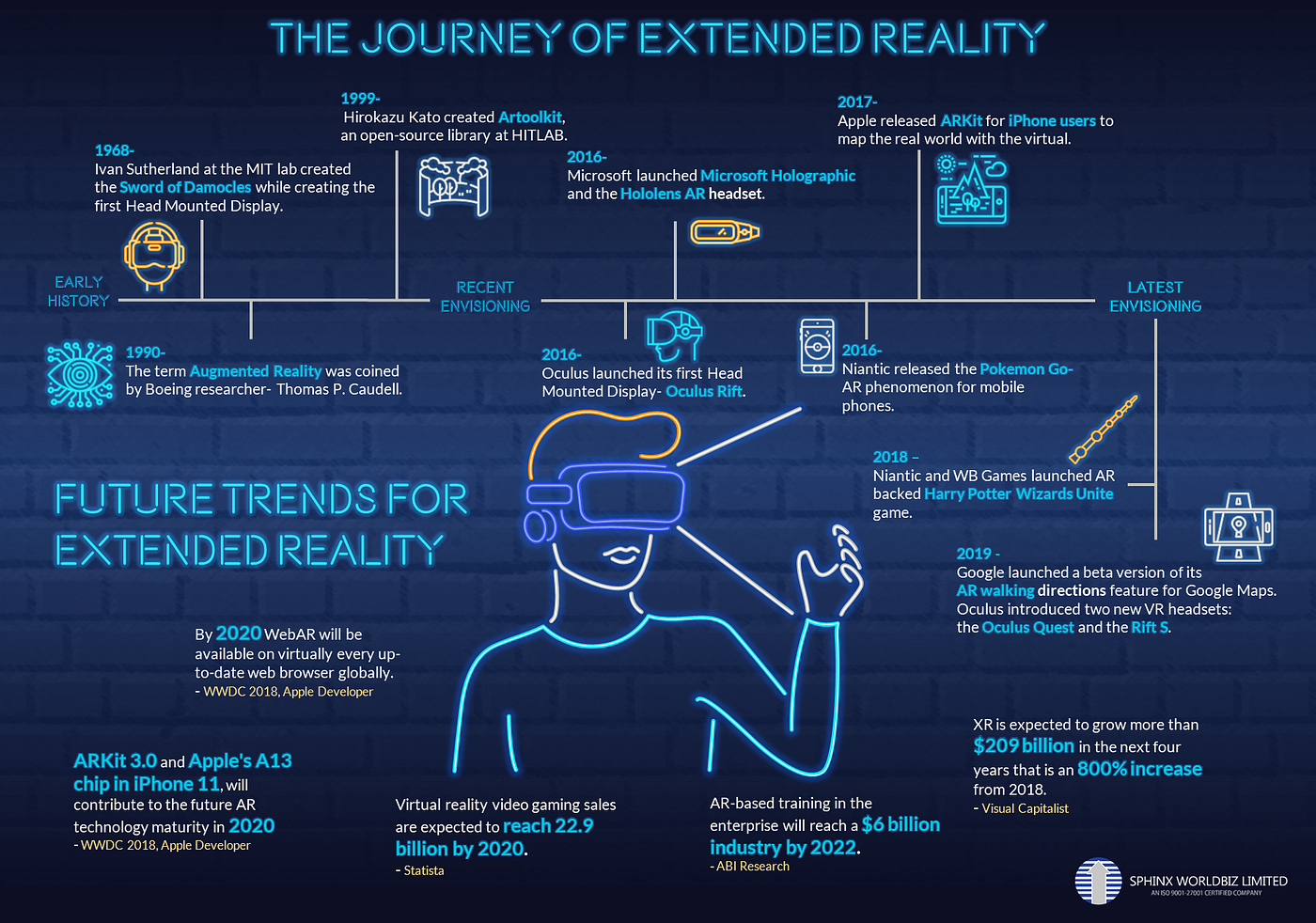
2000年に入ってコンシューマー向けのヘッドマウントディスプレイ/HMD が発売されるようになったことをきっかけに エンターテインメント分野を中心にVRをはじめとするXRのコンテンツ開発/利用検討 が進み 開発環境やハードウェアが進化した
その結果 センシング精度の向上/ハードウェアの低価格化と性能向上/3DCGの普及/表現の高精細化 がもたらされ PCを必要としないスタンドアローンのHMDが登場し 搭載された各種のセンサーやカメラがユーザーの動きや現実世界の物理的な空間情報を高精度で取得して再現することが可能になった
プログラムを開発するゲームエンジンの機能向上/個人利用での無料化に伴う開発者の増加も 技術向上の要因となっている
こうしたさまざまな品質向上により「XR」技術はエンタテイメント分野以外のビジネス利用にも耐え得るようになった
コンピュータや通信技術の発展にともない 映画やゲームなどエンタメ業界を中心に発展してきた技術は 産業界でも活用が広がりつつある
Extended reality (XR) is a catch-all term to refer to augmented reality (AR), virtual reality (VR), and mixed reality (MR). The technology is intended to combine or mirror the physical world with a "digital twin world" able to interact with it, giving users an immersive experience by being in a virtual or augmented environment.
The fields of virtual reality and augmented reality are rapidly growing and being applied in a wide range of areas such as entertainment, cinema, marketing, real estate, training, education, maintenance and remote work. Extended reality has the ability to be used for joint effort in the workplace, training, educational purposes, therapeutic treatments, and data exploration and analysis.
Extended reality works by using visual data acquisition that is either accessed locally or shared and transfers over a network and to the human senses. By enabling real-time responses in a virtual stimulus these devices create customized experiences. Advancing in 5G and edge computing – a type of computing that is done "at or near the source of data" – could aid in data rates, increase user capacity, and reduce latency. These applications will likely expand extended reality into the future.
Around one-third of the global extended reality market is attributed to Europe.